EcoPoint — AI-Powered Recycling Rewards
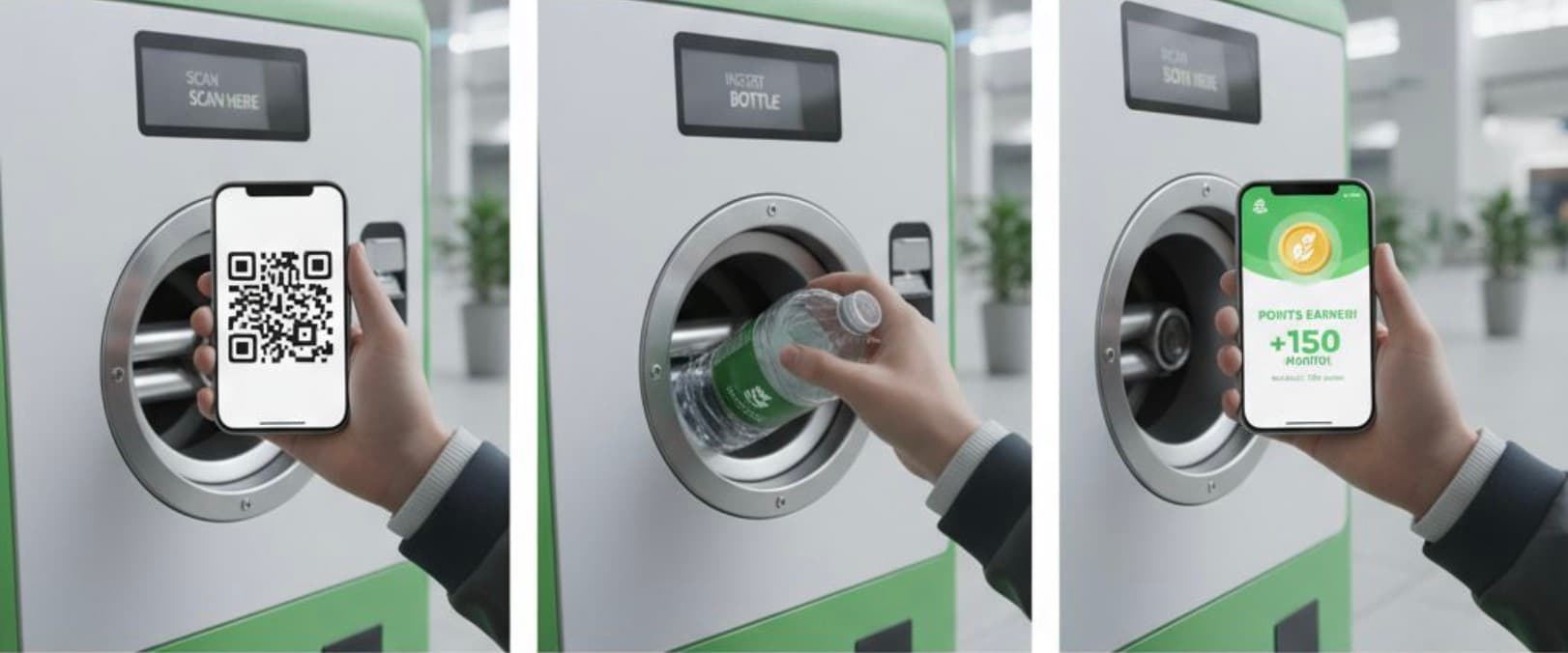
An AI-powered Reverse Vending Machine concept that uses YOLOv8 to verify bottle deposits in real time and reward users instantly — built for HYLIFE Hackathon 2025 as a path toward smarter recycling infrastructure for Chiang Mai.
Role
Machine Learning Engineer
Timeline
~2.5 weeks — HYLIFE Hackathon 2025 (Oct–Nov 2025)
Impact & Metrics
- 2nd Runner-Up, Smart Living & Proptech Track — HYLIFE Hackathon 2025
- Delivered a working end-to-end loop: camera detection → deposit API → points wallet
- Team of 5 co-founders spanning ML, backend, mobile, systems, and business
- Built for the hackathon's Smart Living & Proptech track, under the theme 'Elevating Chiang Mai through Digital Transformation and Automation'
- Detection had to run reliably on consumer camera hardware (laptop webcam) instead of dedicated RVM sensors, since the team was prototyping without custom hardware
- Five-person team split across ML, backend, mobile, systems, and business — needed detection, API, and service layers that could be built and demoed independently
Real-time YOLOv8 detection loop
Built a camera-based detector with Ultralytics YOLOv8 that identifies bottles in the live video feed and auto-submits deposit events to the API, rejecting non-recyclable objects instead of trusting user input.
Two-tier backend: fast prototype + production-shaped service
Paired a lightweight FastAPI layer for demoing deposit, points, and transaction endpoints quickly with a separate Spring Boot + PostgreSQL service for a more production-shaped points and rewards system.
Containerized the whole stack
Used Docker so the detector, API, and database could be spun up consistently for hackathon judging without environment drift.